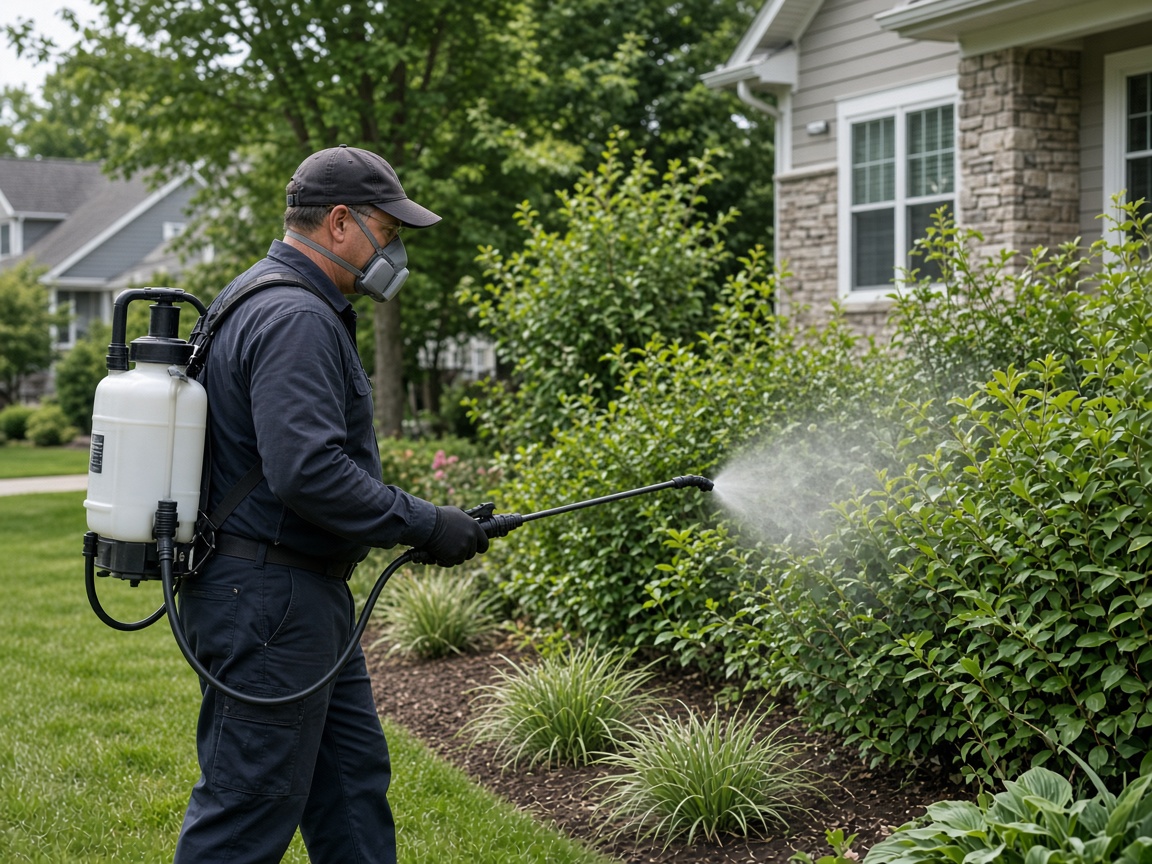
Mosquito Control Monroeville Mall Area targets breeding spots around the retail corridor and surrounding residential blocks. Properties here sit close to the large parking lots and drainage swales that collect water after summer storms. Our crews start at the Monroeville Mall perimeter and move outward to nearby streets where older split-level homes and townhouses back up to wooded edges.
Warm humid days followed by cool nights create steady mosquito pressure from late May through September. We focus on the low spots along Mosside Boulevard and the service roads behind the mall where leaf litter and clogged storm drains hold water. Treatments reach the backyards that border the Murrysville line and the Garden City section just west of the mall.
Access often means working around delivery docks and evening mall traffic, so we schedule most visits before 10 a.m. or after 6 p.m. This keeps treatments away from shoppers while still hitting the shaded foundation plantings and fence lines that hold the heaviest mosquito activity in this specific pocket.
Around Mosquito Control In Monroeville Mall Area
We regularly work near:
- 📍Monroeville Mall
- 📍Mosside Boulevard
- 📍Monroeville Convention Center
- 📍Boyce Park entrance road
- 📍Garden City residential streets west of the mall
Mosquito Control Monroeville in Mosquito Control In Monroeville Mall Area — Local Notes
- •Split-level homes built in the 1960s and 1970s around the mall often have shallow rear yards that slope toward shared drainage ditches, creating hidden breeding pockets after rain.
- •Large asphalt lots at Monroeville Mall and adjacent retail pads collect standing water in curb cuts and wheel ruts that mosquitoes use even when residential yards stay dry.
- •Mature tree cover along Mosside Boulevard and side streets blocks morning sun, keeping ground moisture high and extending the active mosquito window later into the season than open neighborhoods.
- •Storm drains feeding into the Turtle Creek watershed behind the mall frequently back up with debris, so we treat catch basins and the first 50 feet of outlet pipes on every visit.